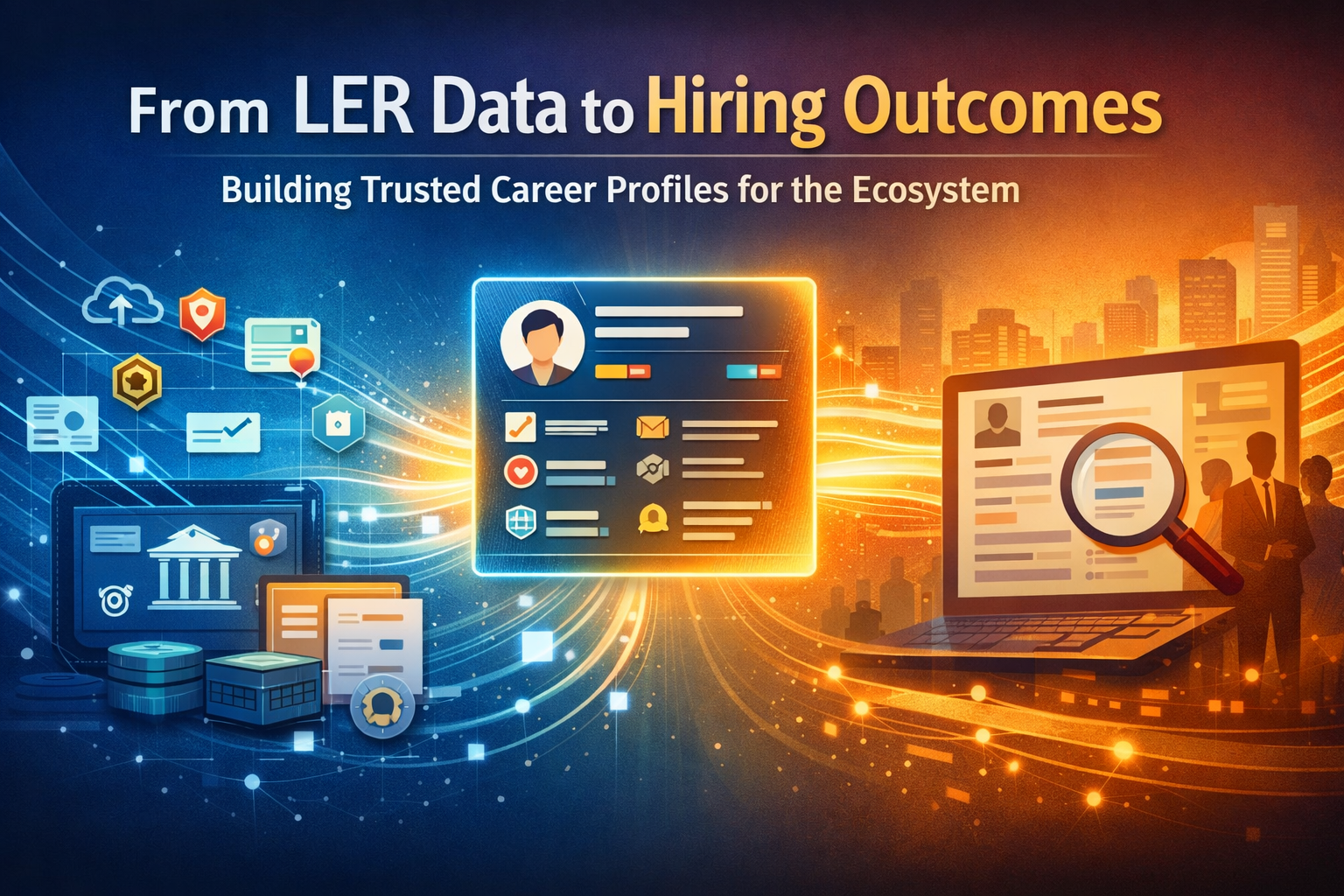
Unlocking Federal Funding for Short-Term Workforce Programs: How Institutions Can Compete Using LER-Powered Talent Marketplaces
The federal government just opened one of the most strategically important funding opportunities of the decade for institutions preparing learners for the future of work. Through the new Fund for the Improvement of Postsecondary Education – Special Projects (FIPSE-SP) competition, colleges, universities, and other eligible organizations can secure millions of dollars to design or expand short-term programs that are tightly aligned with employer demand and powered by modern technologies.
What makes this opportunity different is the stated competitive preference that programs don’t stop at training—they must connect learners directly to employers through a Talent Marketplace built on Learning and Employment Record (LER) data. Priorities 6 and 7 of this funding round call for new or expanded short-term programs (8–15 weeks) that generate verifiable skills, feed those skills into interoperable digital credentials, and match learners to high-skill, high-wage job opportunities.
For institutions looking to launch or scale short-term workforce offerings, this is a rare moment: federal funds are available right now to build the employer-connected infrastructure that policymakers have been pushing toward for years. And thanks to SmartResume’s out-of-the-box LER Talent Marketplace—complete with verifiable learner profiles, integrations with every major credential issuer, and skill-first job posting tools for employers—institutions can meet these requirements without building a custom system from scratch.
👉 To explore how SmartResume can support your institution’s grant strategy, email: hello@smartresume.com
Section 1: What Priorities 6 and 7 Actually Require
Priorities 6 and 7 are centered on helping institutions build or scale short-term workforce programs that lead directly to employment. Priority 6 supports the creation of new short-term programs; Priority 7 supports the expansion of existing ones. Both require programs to be employer-aligned, outcomes-driven, and connected to a functioning Talent Marketplace that uses LER data.
Priority 6: Creating New Short-Term Programs
Competitive proposals must demonstrate:
- Proven employer demand
- Industry partnerships
- Competency-based learning tied to digital credentials
- Pathways from completion to employment
- Integration with a Talent Marketplace
Priority 7: Expanding Existing Programs
Competitive proposals must show:
- Current learner demand and program success
- Opportunities to scale
- Stronger mapping of learning outcomes to employer-defined skills
- LER-enabled credentialing
- A Talent Marketplace strategy to reach more employers and learners
What Reviewers Expect
Institutions must show they can:
- Respond to labor market needs
- Produce verifiable skills and credentials
- Use tools that translate learning into competencies
- Connect graduates to real job opportunities—not just theoretical outcomes
- Build sustainable, interoperable infrastructure
This is a training + credentialing + employment grant.
Section 2: Who Is Eligible & Why This Matters Strategically
A wide range of organizations can apply, but the institutions positioned to benefit most are those building strong bridges between education and employment.
Eligible Applicants
- Community and technical colleges
- Four-year colleges and universities
- Consortia
- Public or private nonprofit agencies
- Workforce organizations and intermediaries
Why 2-Year Institutions Should Care
This grant helps community colleges:
- Modernize short-term programs
- Strengthen employer pipelines
- Build or join a Talent Marketplace
- Improve job placement and reporting
Why 4-Year Institutions Should Care
Universities expanding non-degree offerings can use this funding to launch or grow:
- High-demand certificates
- Bootcamp-style pathways
- Workforce-oriented microcredentials
Why Workforce Boards and Nonprofits Should Care
They can apply directly or partner to:
- Expand job-matching infrastructure
- Build interoperable credential systems
- Improve alignment between training and employer needs
This opportunity is as much about workforce modernization as it is about education.
Section 3: The Talent Marketplace Imperative
The federal definition of a Talent Marketplace is extensive and intentional. It must include:
- A Learning and Employment Record (LER)
- A Credential Registry
- A Skill-Based Job Description Generator
- AI-supported tools that translate learning into competencies
- A public platform where learners, employers, and educators transact around skills, credentials, and jobs
Programs that only train learners—without connecting them to jobs using this infrastructure—will not be competitive.
Why This Matters
The Talent Marketplace requirement pushes institutions to:
- Make skills visible and verifiable
- Align learning with employer needs
- Provide real employment pipelines
- Scale employer engagement beyond advisory boards
It represents a major shift toward interoperable, skills-based systems.
Where SmartResume Fits
SmartResume delivers every component required:
- LER-ready learner profiles with verified skills
- Integrations with all major credential issuers
- A skill-first job description generator for employers
- AI-supported tools for learners and employers to articulate skills
- A public Talent Marketplace that connects learners to jobs
This makes SmartResume a direct enabler of institutional eligibility.
👉 To discuss how SmartResume fulfills the federal Talent Marketplace definition, email: hello@smartresume.com
Section 4: How SmartResume Enables and Accelerates Success
LER Infrastructure Ready on Day One
SmartResume gives learners a verified profile that captures skills, credentials, and supporting experience.
Seamless Credential Publishing
SmartResume integrates with: Credly, Accredible, Canvas Credentials, and other major issuing platforms. All credentials automatically populate the learner’s record.
Skill-First Hiring Tools
Employers can:
- Generate competency-aligned job posts
- Define talent needs in terms of skills
- Match with learners whose verified credentials reflect those skills
Targeted AI Support
SmartResume uses AI to help:
- Job seekers craft strong resume language
- Employers articulate skill requirements
- Learners describe their competencies
Lower Risk, Faster Launch
SmartResume lets institutions:
- Deploy quickly
- Reduce technical lift
- Strengthen their project design
- Focus resources on instruction and employer partnerships
SmartResume provides a turnkey pathway to meeting core federal requirements.
Section 5: Tips for a Competitive Grant Application
1. Make Employer Demand the Centerpiece: Provide commitments, co-designed curricula, and job posts tied to specific skill needs.
2. Tie Learning Outcomes to Verifiable Skills: Show how competencies → credentials → employer-recognized skills.
3. Show How Learners Will Get to Employment: Detail how credentials feed into a Talent Marketplace and how employers will engage.
4. Emphasize Feasibility and Speed: Highlight ready-to-deploy tools and realistic timelines.
5. Describe How the Program Will Scale: Show pathways for program growth, employer expansion, and increased credential issuance.
Conclusion
The FIPSE–Special Projects competition marks a turning point in federal workforce policy. Short-term training is no longer enough—institutions must deliver verifiable skills, portable credentials, and direct pathways to employment through a functioning Talent Marketplace.
SmartResume equips institutions with everything they need to meet these expectations: LER-ready learner profiles, integrations with all major credential platforms, skill-first employer tools, and a public marketplace that connects credentials to real job opportunities.
For community colleges, universities, workforce boards, and regional partnerships, this is a historic opportunity to secure federal funding and build workforce systems that actually work.
👉 To explore how SmartResume can support your proposal or partnership strategy, email: hello@smartresume.com